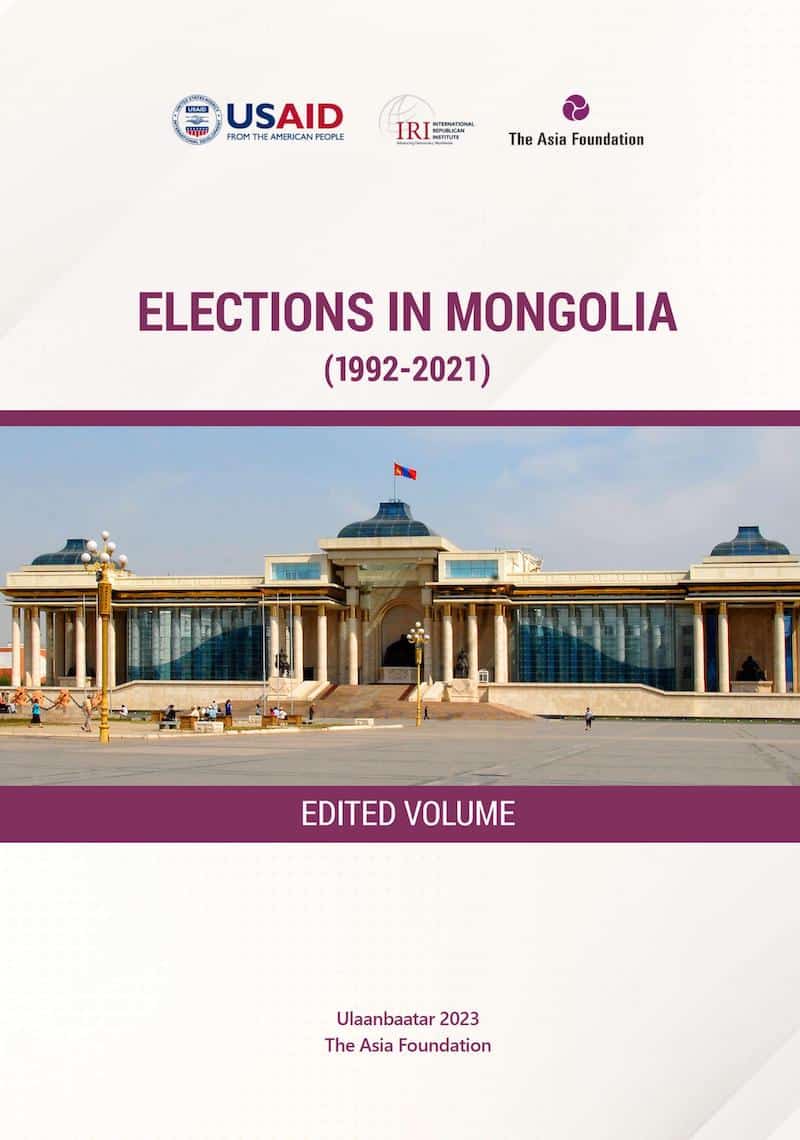
Mongolia’s transition to democracy has been cemented over eight democratic election cycles, each of which has featured multi-party competition, led to peaceful transitions of power, and been deemed free and fair by most observers. These achievements are reminders that Mongolia remains a strong, albeit young, democracy that has shown resilience. Despite a positive overarching narrative, Mongolia’s democracy and its elections face challenges. Declining voter turnout is occurring at all three levels of elections (parliamentary, local, and presidential), a trend that corresponds with growing mistrust in the government and elected officials that can be observed. These challenges mirror those faced by many democracies around the world, but they are also driven by issues unique to Mongolian elections. This edited volume organizes and presents basic data and analysis on elections in Mongolia covering the period of 1992 to 2021. The report aims to make data more accessible and available while also providing analysis on how the Mongolian electoral system’s design impacts the country’s politics and governance. Discussions in this paper cover some key trends in Mongolian elections and provide analysis on explanations for declining voter turnout, the impact of electoral system instability and the state of political party competition, and how all these dynamics are impacting civic education, political party development, elections strategy, and legitimacy.